LANDING SKILLS II
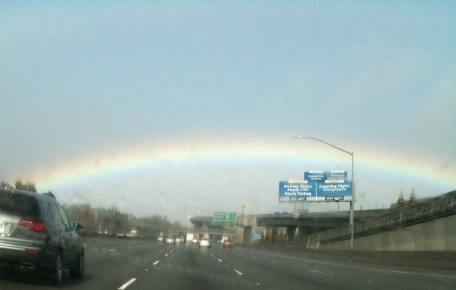
Photo by Christopher Fulkerson
March 2, 2011
All Rights Reserved
DOWNLOAD the Revised Score
DOWNLOAD the Sibelius Soundfile
And here is the iMOVIE of THE SOUND AND THE SCORE
This little piece is key in my development as a composer. Its genesis is a long story, and it became the basis of an even longer story - it is the first piece of the Festival to have been composed. It was commissioned by the Northwestern Science Fiction and dinosaur buff, David Hall. He approached me through correspondence with an idea that he acknowledged to be rather strange, that of my writing a piece which would somehow represent the vocal sounds of dinosaurs - I was to make some real effort to approximate their sounds. Mr. Hall sent me some rather good drawings of dinosaurs and wrote commentaries on their speculated vocal abilities, going so far as to try to reconstruct their vocal ranges on the basis of the size and shapes of their craniums, etc. I was pretty dubious about all this, and I found little to reassure me that there was anywhere any certainty about the sounds dinosaurs used to make, but I accepted the commission on the basis that I could write something that would, through the filter of the imagination, speak to his request. I had to stay pretty loose to sublimate the conditions of this commission, but gradually we agreed on a type of piece; I felt that woodwinds would be best, and that antiphony would correspond the best to the callings across space that I was being told the dinosaurs may have made. Eventually this calling across space put me in mind of the first line of Thomas Pynchon's masterpiece, GRAVITY'S RAINBOW, which hence provides the title of the piece. Somehow both the sounds involved and the diverting absurdity of it all made enough sense in the context of Pynchon's novel that I could proceed in good faith. The piece was no longer "about" dinosaurs, but Mr. Hall, whom I still have never met, was satisfied with the concept as I had developed it. For dinosaurs were substituted V-2 rockets. It seemed like a plausible transformation. Pynchon's offbeat humor helped. (I have also made use of some of Pynchon's words in CELESTIAL SIXTIES I and CELESTIAL SIXTIES II.)
I made a metrical plan for a short piece for two antiphonal woodwind quartets, which could if desired be sung by a vocal octet if virtuosic enough. At the time I did have a basso profundo in Ariel who could sing the low B flat that appears in the piece, and my sopranos had already sung things for me that were similar to some sections of this piece. But I have thought of it as basically a fanfare for woodwinds in the tone of an introduction, and in 2012 I revised the last details of the piece accordingly.
With this piece I began to feel that the methods, designs, materials, and expression I was using were all working together well. Strange as the steps toward the fulfillment of the commission may have been, they too seemed to work. Whether it sounds like dinosaurs, or V-2 rockets, or both or neither, it has a quality of something being suspended in space, and a suggestiveness in its frolicking, bustling activity, that seems to be making an announcement consistent with these kinds of things, like any fanfare. When it came time, later, to write a piece for my vocal ensemble Ariel, I wrote a longer piece that has more of a "screaming" character, and I used the same types of materials, and many of the same ideas, in that piece that I used in this one, including the idea of antiphony. So I called that piece after another line in the Pynchon, THE SCREAM THAT PEAKS PAST FEAR. That piece comes closer to the sounds of (artful!) screaming, really is a vocal piece, and has been sung several times by different Ariel octets. So a fuller explanation of the title of this little fanfare comes by listening to its companion piece. I have a plan to write an entire "screaming" oratorio; there are really quite a few poems and excerpts with this or related themes, and I might want to include Alan Ginsberg's well-known poem HOWL, a poem that could be described as a goodly screaming, as the main body of a trilogy that would include these two pieces. Thanks to the offices of our mutual friend Thomas Parkinson, who gave me Ginsberg's New York telephone number, I spoke with Ginsberg and told him about my plan, which he liked. (He remarked that somebody in San Francisco calling themselves Kush, possibly a rock band, he wasn't sure, had already set parts of it. I have not located this group. Mr. Ginsburg happily seemed to have no thought that because one person might have set parts of HOWL, somebody else couldn't also do it. Ginsburg was polite and mildly intrigued but seemed to want to get back to a rather boisterous-sounding dinner party that was going on at his house. I hung up knowing I had not really made much of a connection with him.) Such an oratorio would include the two ensembles so far used. The vocal octet would again be situated within and around the audience, and the two woodwind ensembles on the extreme sides of the performing space. There are many other ideas sketched out for this projected oratorio; time will tell whether I find the time to write it.
When rereading this piece in November 2012 preparatory to publishing the engraved score and parts I made some small changes here and there which bring the piece decisively into the realm of instrumental, rather than vocal, music. I have no plans to alter its companion piece.
The ensemble of antiphonal woodwinds used in this piece is also employed as an obliggato alternative to the viola fanfares at the beginning of THE CAVERNS OF THE SACRED RIVER.
DOWNLOAD THE ENCORE SOUNDFILE
DOWNLOAD the OBOE I Part
DOWNLOAD the CLARINET I in Bb Part
DOWNLOAD the CLARINET II in A Part
DOWNLOAD the BASSOON II Part
************
Revised Version Uploaded November 26, 2012.